
Empire PeasantsReport
English:Empire Peasants · Factions
The underclass of the United Cities, pushed outside the walls by heavy taxes, poverty laws and slave labour. About three quarters are Hive immigrants, all mild-tempered, who will heal strangers. After the United Cities nobles fall, it is they who move into the vacated towns.
The Empire Peasants are not an army and not an organisation. They are the underclass of the United Cities itself, written up as a faction: tenant farmers crushed by heavy taxes, servants in shacks by the city walls, and people so poor they cannot even get through the city gates and can only camp in the desert.
Poverty is a crime
To understand their situation, first understand a core logic of the United Cities: money is the measure of a person. In Empire culture, extreme poverty is not only misfortune but is seen as the seed of crime, so the destitute are often sold straight into slavery.
The other side of this logic is that the Empire sets almost no limits on race or religion. What you believe and how you look, nobody cares as long as you obey the law; the real dividing line is money [V1 0:00:58] [V2 0:00:58]. The nobles legislated poverty into a crime, low earners are pushed outside the walls, and the only protection outside is the occasional passing samurai patrol [V3 0:03:55]. The Empire also abuses the law to arrest its own citizens and profit from their forced labour [V2 0:00:58].
The material conditions are tight in themselves. Compared to the Holy Nation, the United Cities lack arable land, food, water and medicine are scarcer, and the class gap opens up on that foundation [V3 0:03:55]. One commentator points out that the Empire effectively has no middle class, only destitute commoners and nobles, with soldiers and samurai wedged between; wealth flows to foreign trade and the lords of each city, and almost none returns to the people [V4 0:16:22].
This is not just a player's inference; the ruling class writes it that way itself. The in-game book The United Cities, A United Power argues that money belongs to the strong and that the beggar's place is the mines. Issue three of the official tabloid United Weekly is headlined "Cleaning up the Dregs", and criticises the poverty laws as not harsh enough. Other issues of the same tabloid discuss the emperor's new hat and this season's fashionable golden trousers; the juxtaposition needs no extra interpretation.
Why most are Hivers
Among Empire Peasants, the quota for Hive worker drones is four times that of Greenlanders, soldier drones twice, plus a few princes, so about three quarters overall are Hivers. Greenlanders and Shek each make up about one eighth, and Scorchlanders only a handful.
Behind this is a migration chain: most Hive commoners in the Empire come from the Western Hive in the north, working as tenant farmers and servants, forming the Empire's lower labour class. Nobles speak of them with open disgust, and the newspapers blame them for rising crime. Issue one of United Weekly is headlined "Twig men bring even more crime to the United Cities", and issue five accuses native Hivers of abusing visiting Empire merchants "like animals". This is a newspaper written for city folk.
To make matters worse, there is also a xenophobic group in the city calling itself "city heroes", the United Heroes League. Its members are all Greenlanders, who accuse other races of stealing jobs and wrecking farmland and shops, follow and harass non-human characters in the player's squad, and may attack if they follow you out of the city. They are classed as bandits in the game, so attacking them in the city makes the guards help the player instead, and the Traders Guild does hire them as expendable troops.
How they live
Empire Peasant life takes several forms in the game.
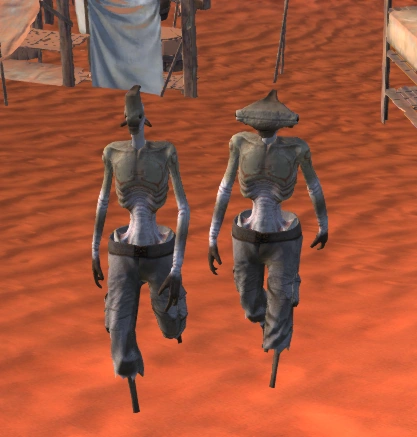
- Homes: some live in shacks at the edge of towns, farming or serving for barely enough to get by. Others are too poor to get in the gates and can only settle in vagrant camps in the wilds. Around the camps there are often small squads of one to six wandering about, with Rebel Farmers passing through now and then.
- Gear: farmers wear straw hats and wooden sandals and carry a staff. Their gear is only ever from the lowest two grades of bad quality, half each, with no better option.
- Members: besides farmers and tenants, this faction also shelters escaped slaves. Escaped slaves carry a bounty of 2,000 Cats posted by the United Cities, wander the deserts everywhere, and can be talked to and recruited when met alone.
What happens when you meet them
They are civilians who do not start trouble, and they are not bad-hearted: a stranger lying on the ground, they will help heal. Killing them is no big deal, with an effect on faction relations of only one twentieth that of an ordinary person; farmers are one fifth, and escaped slaves have none at all.
Their faction relations have only two exceptions: to the United Cities the maximum +100, to the Holy Nation the minimum -100.
Why would a class so poor that its own country swept it out harbour the deepest hostility to a distant theocracy? There are two accounts, neither confirmed: one says what the Holy Nation did in Bast left hatred behind; the other says United Cities propaganda manufactured an external enemy, with the effect landing on the class easiest to mobilise. It is worth noting that they hold no negative attitude toward the Noble Circle that abuses them, and their loyalty to the United Cities is unconditional.
An ambiguous relationship with the Rebel Farmers
The Rebel Farmers come from the same class, the version of dispossessed commoners who took up arms, but the two sides do not get along. The Rebel Farmers and Rebel Swordsmen rate the Empire Peasants at the highest favour, and Nomads (+50) and Anti-Slavers (+70) are also friendly to them. But when they actually exchange fire, the rebels angrily curse those opposite as "traitors".
From the rebels' viewpoint, those who stay inside the system farming for the nobles are accomplices. From the farmers' viewpoint, rebels who rob caravans and travellers on the roads are a threat, and rebels rob not only the upper classes. This is also why ordinary citizens generally have no sympathy for the rebellion: caravans and shop guards go straight over to the side of the Empire samurai.
After the Empire falls
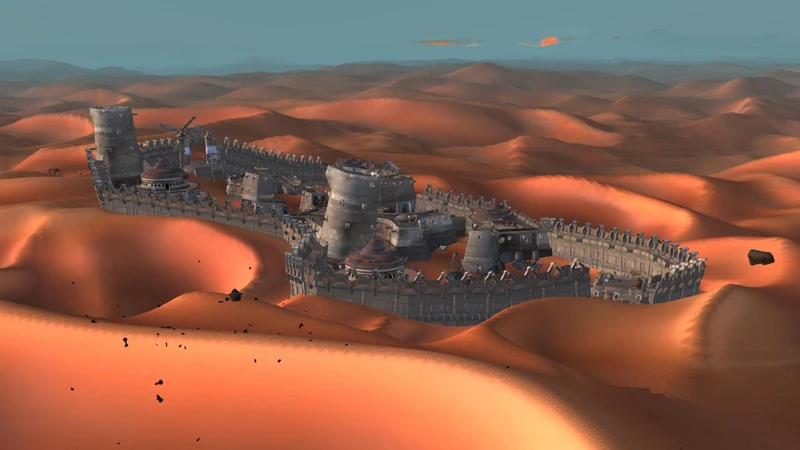
The Empire Peasants' real weight shows only when the United Cities collapse. When the Noble Circle are cleared out one by one, it is not the Rebel Farmers who take over the towns but they, and not by storming the walls but by moving in: the farmers do not attack the cities, they simply move into the abandoned buildings and settle [V5 0:10:10].
Depending on the world state, towns that may fall into their hands include Sho-Battai, Heng (two), Heft, Bark (two), Clownsteady, Trader's Edge, Port North and Port South. Which version applies depends on who has fallen: Emperor Tengu, the city lords or the slave traders.
But "the peasants won" sounds better than it is. One video's count says that of the United Cities' original settlements the Empire Peasants take over only about forty percent, with the rest either abandoned or in bandit hands [V5 0:10:10]. And the Empire's whole machinery vanishes together with the nobles: samurai patrols, Traders Guild caravans and slave markets all stop, and the economy falls back to farming, barter and scavenging [V5 0:11:53].
The state after takeover varies greatly.
- Sho-Battai is genuinely rebuilt, with Free Traders opening shops and Rebel Swordsmen guarding the gate.
- Port North is half-restored from a destroyed slave camp into a fishing port and farming town, holding up the supply line to Heft.
- Heft is the other extreme: most buildings destroyed, survivors malnourished, residents mostly squatters occupying houses.
Can they run a country
The answer leans towards no, for concrete reasons: the Empire Peasants have no leader, no hierarchy, no recognisable law, and no sign of any central leadership [V5 0:11:53]. They are a non-aggressive aggregate, forming mutual-aid networks with refugees, traders and even drifters, but with no administration, no garrison and no long-term planning, and as a result many settlements stay at malnourished or half-ruined levels for a long time.
Economically they keep up farming, trade and scavenging, lacking engineers, caravans and coordination of labour; holding on to what they inherited is already a struggle. On security it is paradoxical: there are no more noble executions, slave hunts or arbitrary arrests, but also no defensive line, and raids by bandits, Skimmers and Cannibals succeed more easily.
One commentator puts the two orders side by side: the United Cities are orderly but oppressive, the Empire Peasants free but fragile, and the latter got freedom from oppression, not freedom from danger [V5 0:13:36]. The same analysis concludes that the Empire Peasants are a "commoner takeover faction", close to a placeholder, with not a single named character other than Boss Simion, and their way of controlling a town is simply being there [V5 0:14:42]. This is the channel's assessment, not a verdict handed down by the game, but it fits the faction's actual behaviour in the game quite well.
Data and Formulas
The full numbers, for players who want to dig deeper.
Faction
| Field | Value | Notes |
|---|---|---|
| Default relation | 0 | Neutral |
| Enemy classification threshold | -10 | Attack on sight only if relation is below -10 |
| To United Cities / Holy Nation | +100 / -100 | The faction relation table has only these two exceptions |
| Heals strangers | Yes | Heals strangers who are down |
| Business relations threshold | -5 | |
| Building cost mult | 2.0 | Buying buildings from them costs double the default price |
| Run away ratio | 0 | Does not flee for being outnumbered |
| Road preference | 0.6 | Default 0.4; they prefer the main roads |
| Door, chest and cage lock level | 20, random variance 10 | |
| Armour quality ratios (armours 0 to 5) | 100 / 100 / 0 / 0 / 0 / 0 | Only the lowest two grades, bad quality, half each |
| Roaming population | 50 | |
| Legal system | United Cities | Shares one legal system with the United Cities |
| Trade culture | Empire | |
| Building replacement | Bad beds and stools swapped for cheap chests |
Racial ratios
| Race | Weight | Share |
|---|---|---|
| Hive Worker Drone | 400 | 48.2% |
| Hive Soldier Drone | 200 | 24.1% |
| Greenlander | 100 | 12.0% |
| Shek | 100 | 12.0% |
| Hive Prince | 20 | 2.4% |
| Scorchlander | 10 | 1.2% |
Hive total 620/830, about 74.7%.
Members
| Role | Combat skill base | Variance | Faction importance | Other |
|---|---|---|---|---|
| Empire Peasant | 12 | ±6 | 0.05 | 50% chance female, daily wage 100, no weapon specified |
| Peasant Farmer | 12 | ±6 | 0.2 | Straw hat, halfpants, white vest, wooden sandals, carries a staff |
| Escaped Slave | 12 | ±12 | 0 | Only ragged loincloth, carries an iron bar, bounty 2,000 Cats (United Cities, 100% chance) |
Faction importance is multiplied by the relation change; the lower the value, the smaller the effect of defeating this person on faction relations.
Settlements
| Settlement | Type | Notes |
|---|---|---|
| Vagrant Camp | Lair-type base, 20 permanent | Squads of 1 to 6 peasants each, plus roaming Rebel Farmer squads |
| Old Village | Ruins, no shop | The two damaged houses each have a "broken house clutter list" of building materials, iron plates, cloth, sleeping bags, water jugs and crossbow bolts, with a smaller share of medical and travel supplies |
| Empire Village | Outpost-type base |
Towns taken over after the Empire collapses
These are the "overlay versions" of the same town under specific world states, with the Empire Peasants as the faction.
| Town | Version |
|---|---|
| Heft | Squatters |
| Bark | Prosperous, two conditions in all |
| Sho-Battai | Prosperous |
| Heng | Two versions, one of them prosperous |
| Trader's Edge | A few residents remain |
| Port North | Farm town |
| Port South | Farm town |
| Clownsteady | Prosperous |
Research Notes
- The earlier draft's infobox said "gear quality only Prototype and Shoddy". The faction's armour quality ratios in the data are 100/100/0/0/0/0, meaning the lowest two grades half each; checked correct.
- The earlier draft's racial ratios (Hive about 75%, Greenlander and Shek 12% each) checked correct.
- The quotation from The United Cities, A United Power in the earlier draft has been changed to a paraphrase.
- The earlier draft said the faction has "only two faction relation exceptions"; checked correct. Added: the faction has a heal-strangers setting, and the favour values other factions (Rebel Farmers, Rebel Swordsmen, Nomads, Anti-Slavers) hold for them.
- The earlier draft gave the escaped slave bounty as 2,000 Cats; checked correct, and added that the bounty chance is 100% and it is posted by the United Cities.
- Details the earlier draft described, such as Clownsteady's price bonus (500% becoming 1,200%), Heft's "seventeen buildings all destroyed" and Sho-Battai's "20% damaged", have no corresponding record in the data and were removed. The claim that "the Empire Peasants inherit only about forty percent of settlements" comes from a video count and has no matching field in the data.
- The earlier draft said Old Village has two usable wells, fuel and steel bars and so on; the data only shows building materials, iron plates, sleeping bags and the like in the broken house clutter list, and the wells and other items are not confirmed by game data, so this was rewritten.
- The earlier draft said the camps are found in the Great Desert and around Heng; the vagrant camps have no fixed location in the data, so this passage was deleted.
See also
- Rebel Farmers: the ones who took up arms
- United Cities
- Noble Circle
- Slavery
- Hive
Video citations
- Kenshi: Major Powers | United Cities and Holy NationCivilizationEx
- History of Kenshi: Major Powers | DocumentaryCivilizationEx
- Kenshi: History of the United CitiesCivilizationEx
- Which Faction Can Succeed on Kenshi?HeroInHisHead
- What If The Rebel Farmers WinHeroInHisHead