
Crafting & FarmingReport
English:Crafting & Farming · Game Mechanics
Starting from raw stone and iron ore, Kenshi's production chain runs all the way up to heavy armour, prosthetics and foodcubes. Farming is constrained twice over, by environment and by fertility, and armour quality depends only on the crafter's skill while weapon quality depends only on research.
Kenshi's production system is a long but very straight chain: three raw materials dug out of the ground are each refined separately, then converge into equipment, food and power. Working out which stretch runs on skill and which runs on research is the dividing line between a base that feeds you and one that does not.
Three base material chains
| Material | Step 1 | Step 2 | Step 3 |
|---|---|---|---|
| Raw Stone | Stone Mine | Stone Processor (2 stone → 1 building material) | Building Materials |
| Raw Iron | Iron Mine / Ore Drill | Iron Refinery → Iron Plates | Steel Refinery → Steel Bars |
| Raw Copper | Copper Mine | Electrical Workbench → Electrical Components | Copper Alloy Bench (copper + iron plates) → Copper Alloy Plates |
A few practical points:
- The Ore Drill can be built well away from a vein, and once Fully Automatic Ore Drill is researched it needs no worker at all.
- The Electrical Workbench trains Science, and the Copper Alloy Bench trains Engineer — both good side jobs for your researcher.
- The late-game Hybrid Stone Mine outputs building materials directly, skipping the processor.
Farming
Farming in Kenshi has two layers of constraint: environment (can it grow here) and fertility (how fast it grows). Environment is set by the biome, is visible when you survey, and is identical anywhere within a region; fertility varies from site to site.
| Crop | Arid | Green | Swamp | Water/day | Growth hours |
|---|---|---|---|---|---|
| Cactus | 100% | 0% | 0% | 2 | 24 |
| Cotton | 0% | 100% | 0% | 10 | 30 |
| Greenfruit | 0% | 100% | 0% | 10 | 23.3 |
| Hemp | 40% | 100% | 100% | 6 | 21.6 |
| Riceweed | 0% | 0% | 100% | 10 | 15 |
| Wheatstraw | 50% | 100% | 0% | 5 | 22 |
Environment effects are additive: in a region that is both green and arid, the two scores stack.
Farms come in small / medium / large / extra-large, but the footprint is exactly the same for all of them — build the small one first and upgrade in place once the harvest justifies it; crops still standing in the farm count toward the seedlings the upgrade requires.
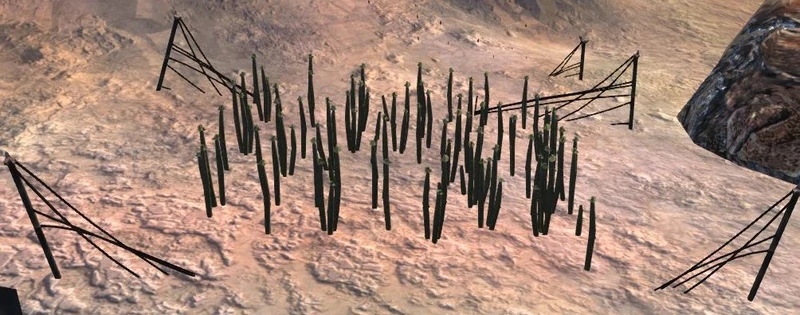
Hydroponics is the endpoint of farming: it needs Research Bench V and 1 AI Core, plus a separate unlock for each crop. A hydroponics bed comes in one size and holds 10 plants, but each plant yields several times as much and grows extremely fast, so its efficiency beats an ordinary farm outright — and it ignores environment and fertility completely, so you can even grow on a town rooftop.
The least troublesome way to train Farming is not to build your own fields but to work the existing farms in town: operating a town's crops is not treated as trespass, and the harvest carries no "stolen" tag. Swamp towns are the best choice — crops there need no watering, and riceweed and hemp are the two fastest-growing crops. A race with a positive farming multiplier (Greenlanders, Hive Workers) can hit 25 in two in-game days.
The food chain
Crops are only half-finished goods; feeding a whole base takes one more processing step:
- Cooking (1 book) → Cooking Stove → Cooked Vegetables (25 nutrition), Rice Bowl (25)
- Baking (2 books) → Grain Silo (10 wheatstraw → flour) + Bread Oven → Bread (30)
- Advanced Cooking (2 books) → Foodcube (75), Ration Pack (75), Meatwrap (50)
- Desert Cooking (3 books) → Chewsticks (20), Dustwich (70)
A character eats automatically once hunger drops below 250, and will eat food from the backpacks of squadmates — so one dedicated pack mule can feed the whole squad. Raw ingredients (raw meat, bread) are the exception: those are only eaten below 200. Food in Kenshi never spoils, so there is no cost to hoarding.
Fabric and light gear
The Fabric Loom turns cotton into fabric; after further research it can run on hemp instead — noticeably more efficient, at the cost of an illegal input. Fabric is the shared input for the Clothing Bench, the chain armour benches and the Heavy Armour Smithy, and it also goes into medical supplies and tents. The loom can be upgraded to a fully automatic version.
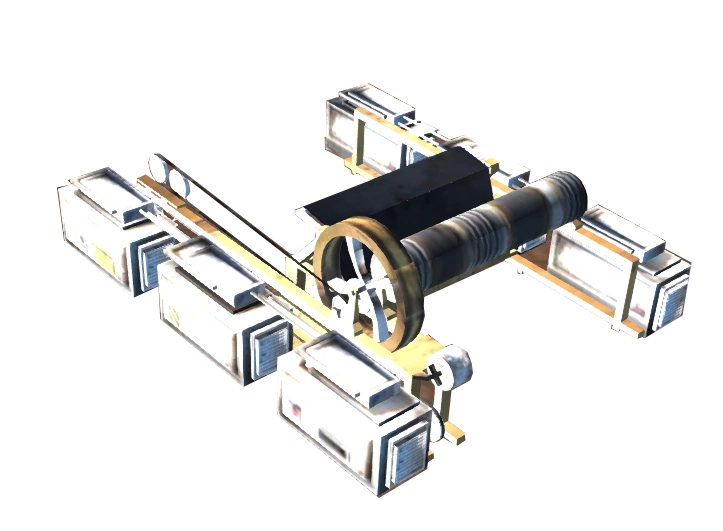
The Clothing Bench turns fabric into clothing or light armour, and is also the fastest place to start training Armour Smith — cheap inputs, short craft times.
Armour smithing
The armour line is straightforward: quality and speed depend on the Armour Smith skill alone, regardless of how many research tiers you have. Each machine handles one stage:
| Bench | Input | Output |
|---|---|---|
| Clothing Bench | Fabric | Clothing, light armour |
| Leather Tanning Bench | Animal skin | Leather |
| Leather Armour Crafting Bench | Leather | Clothing, light armour, medium armour |
| Chainmail Sheet Fabrication Bench | Raw iron | Chainmail sheets |
| Chain Armour Crafting Bench | Chainmail sheets | Chain armour |
| Heavy Armour Smithy | Armour plating | Heavy armour, Heart Protectors and so on |
Producing the intermediate materials — leather, chainmail sheets, armour plating — grants Armour Smith experience in its own right. The common approach is to mass-produce chainmail sheets for money and levels first, and only buy chain armour blueprints once the skill is high enough.
Weapon smithing
The rules for weapons are exactly the reverse of armour:
- The Weapon Smith skill affects speed only, not quality.
- Quality comes from research — Basic Weapon Smithing, Basic Weapon Grades, Advanced Weapon Smithing and Advanced Weapon Grades raise it tier by tier.
Weapons are forged from iron plates, and the weapon smithy can be upgraded twice. Putting an Item Furnace next to it is convenient: low-quality weapons thrown in melt back into raw iron, letting you keep working when mining cannot keep up — the drawback is that you have to feed it one weapon at a time and cannot set it as a standing job.
Crossbows and bolts form a separate line: researching Crossbow Bolts allows an Arrow Making Bench, but it only produces the most basic Toothpicks; every other model needs a blueprint. Bolts consume iron plates or steel bars.
Medical and robotics
- Medical Workbench: first aid kits and splint kits of every grade, plus sleeping bags. Trains Field Medic.
- Robotics Bench: makes robotics components and skeleton repair kits from electrical components, iron plates and steel bars. Note that this bench trains Science, not Robotics — sending your researcher over as a side job is the most economical use.
- Skeleton Limb Bench: this is the one that runs on Robotics, and it produces replacement limbs. It starts with the Hive-copied "Economy" prosthetics and goes up to Skeleton arms and legs, Stealth Legs and high-speed legs, which need AI Cores.
Making money from crafting
Crafting is the lowest-risk income source in Kenshi. Going by measured figures at Armour Smith 80, the most profitable thing on the Clothing Bench is headwear:
| Item | Craft hours | Sale price | Profit per hour |
|---|---|---|---|
| Bandana | 0.6 | 175 | 271.8 |
| Turban | 1.1 | 175 | 138.8 |
| Tagelmust | 1.4 | 175 | 105.8 |
| Rag Belt | 0.5 | 49 | 68.2 |
| Martial Artist Bindings | 3.0 | 147 | 47.0 |
Conversely, the Wool Hat and the Human Skin Suit run at a loss — each one made loses you a little money, because the fabric they consume costs more than they sell for.
Skill quick reference
| Bench type | Skill trained |
|---|---|
| Fabric Loom, brewing equipment | Labouring |
| Clothing / leather / chain / heavy armour | Armour Smith |
| Weapon smithy | Weapon Smith |
| Medical Workbench | Field Medic |
| Robotics Bench, Electrical Workbench | Science |
| Skeleton Limb Bench | Robotics |
| Copper Alloy Bench | Engineer |
| Farms, Grain Silo | Farming |
| Cooking Stove, brewing | Cooking |